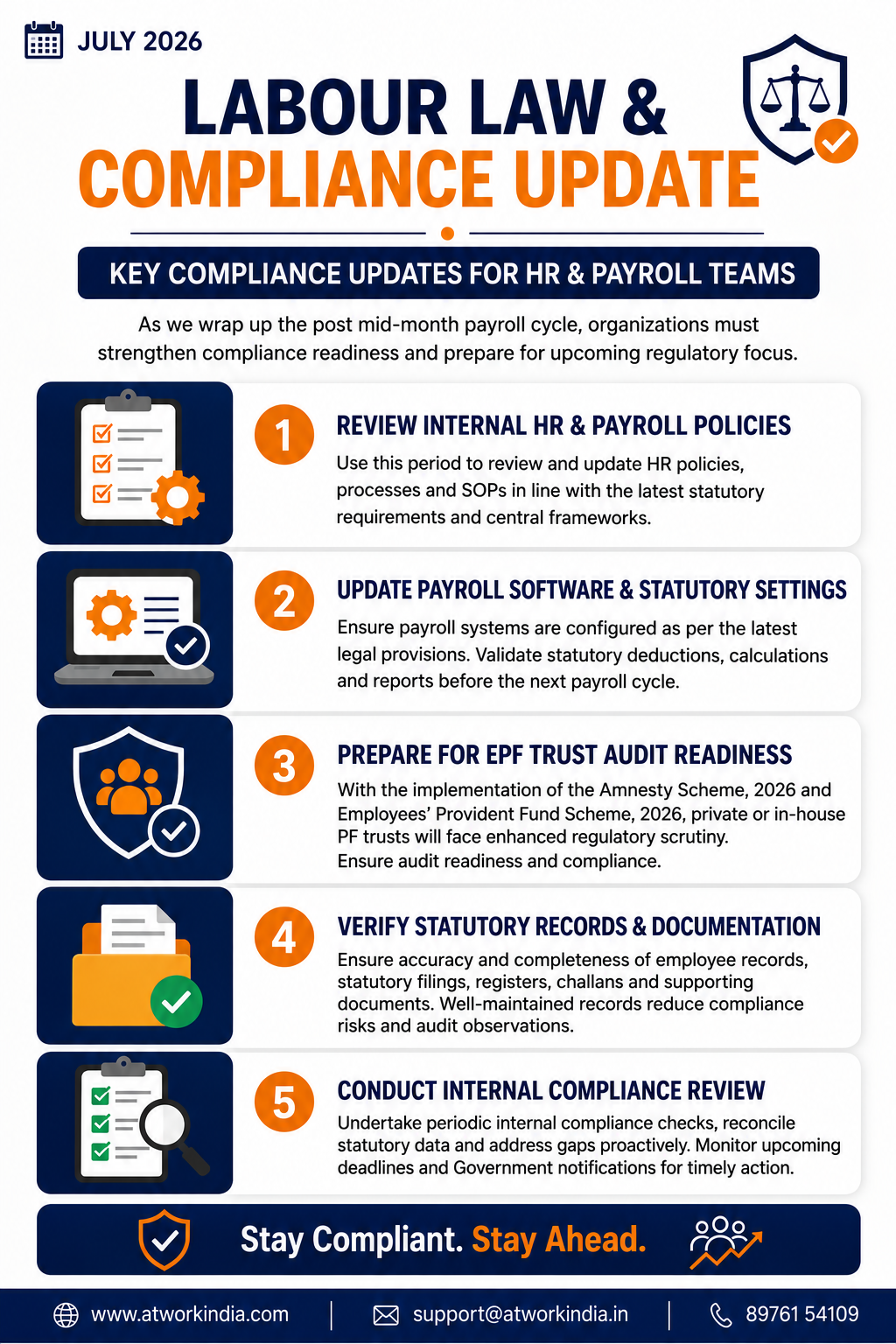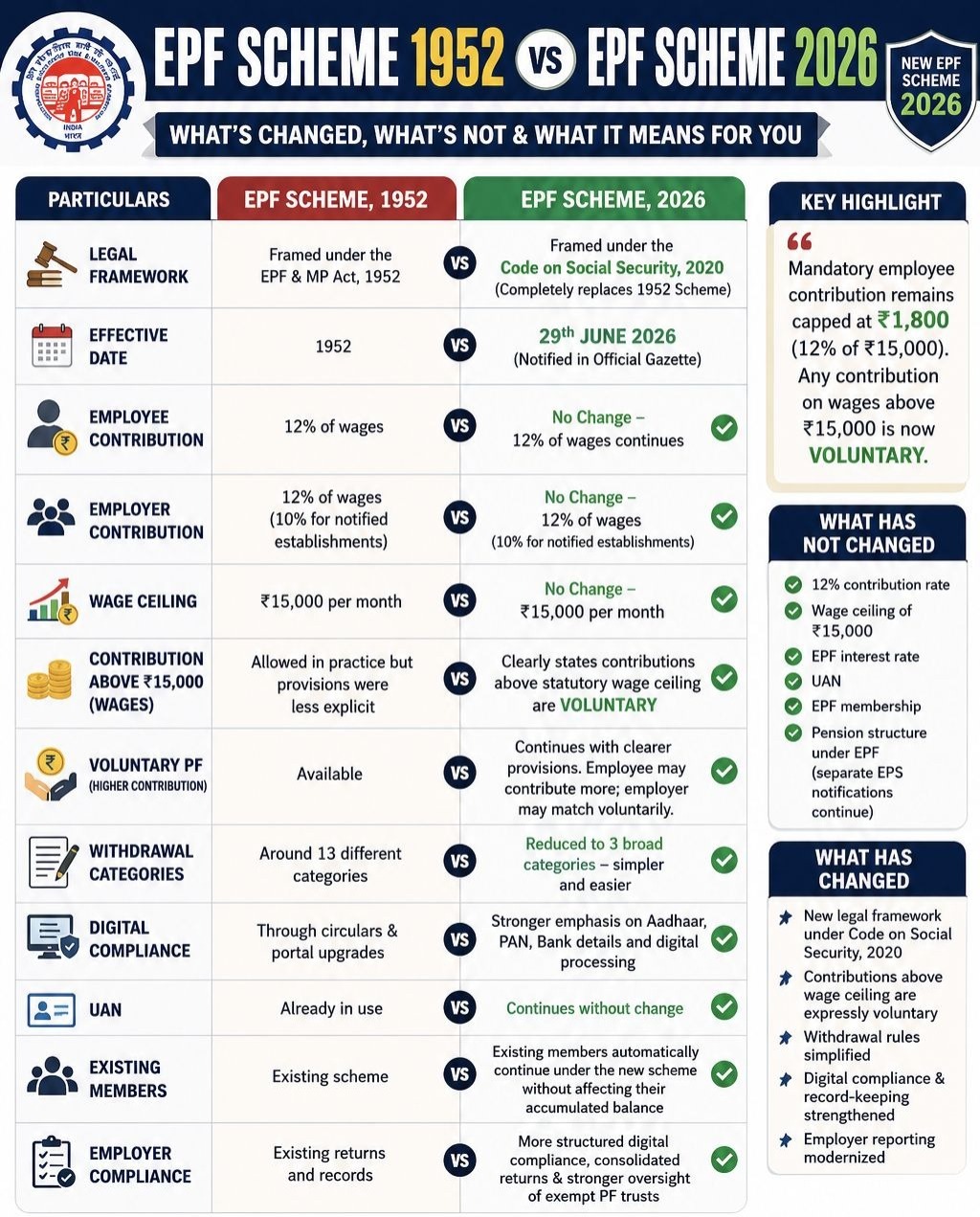


Managing human resources in a private limited company requires a solid grip on central labour codes and acts. Non‑compliance can lead to heavy penalties, legal hassles and employee distrust. Below is a concise, actionable guide based on the latest Indian labour laws — exactly what every HR professional needs.
📆 Timely payment & no unauthorised deductions
✔ Salary must be credited by the 7th of every month (or earlier if the company's rules specify). The code consolidates the Payment of Wages Act, 1936 and Minimum Wages Act, and strictly prohibits arbitrary deductions. HR must ensure that any deduction (PF, ESI, tax, loan) is authorised in writing and legally compliant.
Minimum wages: Even if not scheduled, wage floors are notified by central/state governments – ensure your CTC meets at least the minimum wage for the scheduled employment category.
🧾 Salary slips are mandatory – no cash beyond prescribed limit
Every employee must receive a monthly salary slip containing details of earnings, deductions, and net pay. The Act (as amended) prescribes that wages must be paid through bank transfer or cheque; cash payments are restricted (only if monthly wage is below a threshold, typically ₹5000, but digital is always safer).
💡 Pro tip: generate digital salary slips via your payroll software and store them for 7 years.
🎁 Annual bonus for eligible employees
Applicable if the company has 10 or more employees. Bonus (minimum 8.33%, maximum 20%) must be paid to employees drawing salary ≤ ₹21,000 per month. The calculation is based on salary ceiling of ₹7,000 or minimum wage, whichever is higher. Even if your company is less than 10, many states make it applicable under local Shops & Establishments.
⚠️ Don’t confuse with working hours: Bonus Act doesn’t prescribe work hours. But note: under Factories Act / Shops Act, max 9 hours/day, 48 hours/week with weekly off and public holidays – HR must ensure rotas comply.
Health & insurance benefits
Mandatory for companies with 10+ employees (in some states threshold is 10, in others 20; but in Maharashtra it’s 10). Covers medical, maternity, disability and dependent benefits. Employees earning up to ₹21,000 per month (₹25,000 for persons with disability) are covered. Both employer (3.25%) and employee (0.75%) contribute.
⚠️ Ensure timely filing of monthly returns and provide IP cards to employees.
Equal pay for equal work
No discrimination in pay or recruitment based on gender. The law mandates that men and women performing same or similar work must receive same rate of remuneration. Also prohibits gender‑based discrimination in transfers, training, and promotions. Penalty for violation: fine up to ₹20,000 or imprisonment up to 3 years.
📌 Now subsumed under Code on Wages, 2019 but compliance remains identical.
Gratuity after 5 years of service
Eligible: employees (excluding apprentices) with 5+ continuous years. Payable within 30 days of resignation/superannuation. Formula as per image:
(Last salary × 15 days × years of service) / 26
(last salary = basic + DA; years >6 months rounded to next year). Companies with 10+ employees must register under the Act.
⚡ For month‑end processing: gratuity is a statutory liability – consider actuarial valuation.
Workplace harassment prevention – mandatory ICC
Any private company with 10+ employees must constitute an Internal Complaints Committee (ICC). Annual reports must be filed with the district officer. Organise awareness sessions for all employees. Non‑compliance can lead to cancellation of licence.
⚠️ At a glance: penalties for non‑compliance
| Act / violation | Penalty / consequence |
|---|---|
| Delay in wages beyond 7th (Code on Wages) | Fine up to ₹75,000 + imprisonment possible |
| No salary slip (Payment of Wages Act) | Fine up to ₹5,000 and per‑day fine for continuing offence |
| Non‑payment of bonus (Bonus Act) | Fine up to ₹1,500 + recovery of due amount |
| ESI contribution default | Interest 12% p.a. + damages up to 25% + imprisonment up to 3 years |
| Gender pay discrimination | Fine up to ₹20,000 or imprisonment up to 3 years or both |
| Gratuity not paid within 30 days | Interest at 10% p.a. + penal interest |