LinkedIn Instagram Facebook
Home/ Media/ Blogs/ Old Labour Rules vs New Labour Laws 2025 — Ke…
Blogs

Old Labour Rules vs New Labour Laws 2025 — Key Changes Explained

June 05, 2026
Back to Blogs

# Old Labour Rules vs New Labour Laws 2025 — Key Changes Explained

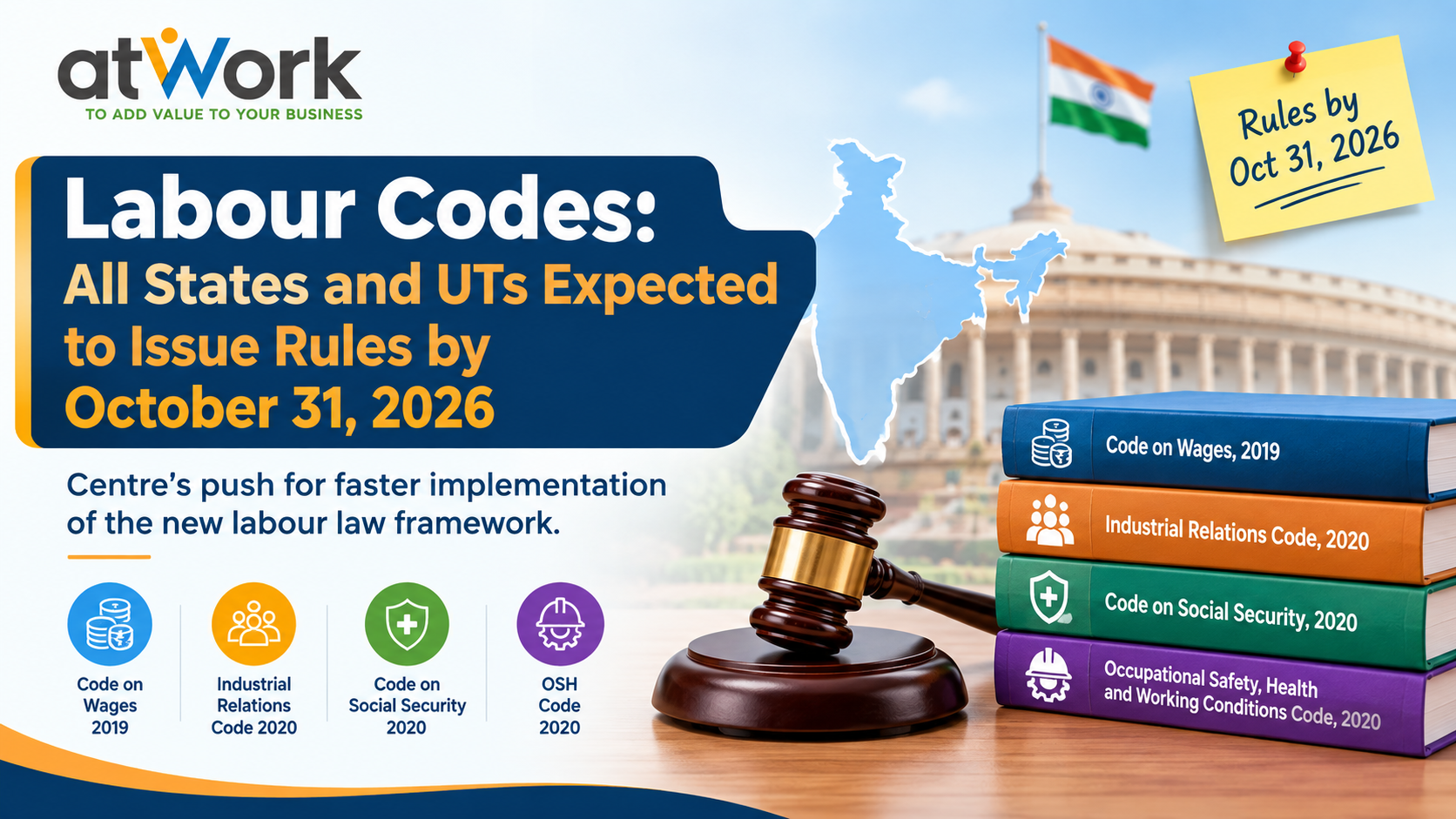
India's labour law framework is undergoing a major transformation. The government has consolidated 29 central labour laws into four comprehensive labour codes aimed at simplifying compliance, improving ease of doing business, and strengthening worker welfare.

For employers, HR professionals, payroll teams, and employees, understanding these changes is essential to ensure compliance and prepare for the future of work.

---

## Why Were Labour Laws Changed?

The previous labour law structure consisted of numerous separate Acts, resulting in complex compliance requirements, overlapping provisions, and administrative challenges.

The new labour codes aim to:

* Simplify labour law compliance
* Create uniform definitions across laws
* Improve social security coverage
* Encourage formal employment
* Promote transparency through digital compliance
* Balance worker protection with business growth

---

## Old Labour Rules vs New Labour Laws 2025

### 1. Multiple Laws vs Unified Labour Codes

#### Old System

Employers had to comply with multiple labour laws such as:

* Factories Act, 1948
* Industrial Disputes Act, 1947
* Minimum Wages Act, 1948
* Payment of Wages Act, 1936
* Employees' State Insurance Act, 1948
* Employees' Provident Funds Act, 1952

This often resulted in duplication of records and multiple inspections.

#### New System

The government has merged these laws into four labour codes:

1. Code on Wages, 2019
2. Industrial Relations Code, 2020
3. Occupational Safety, Health and Working Conditions Code, 2020
4. Social Security Code, 2020

**Impact:** Simpler compliance and reduced administrative burden.

---

### 2. Uniform Definition of Wages

#### Old System

Different laws used different definitions of wages, creating confusion in payroll calculations.

#### New System

A standardized definition of "wages" applies across labour laws.

Key rule:

* Basic Pay + Dearness Allowance should generally constitute at least 50% of total remuneration.

**Impact on Employees:**

* Higher PF contributions
* Increased gratuity calculations
* Potential change in take-home salary

**Impact on Employers:**

* Payroll restructuring may be required.

---

### 3. Social Security Coverage Expanded

#### Old System

Social security benefits mainly covered organized sector workers.

#### New System

Coverage is expanded to include:

* Gig workers
* Platform workers
* Contract workers
* Unorganized workers

Examples include workers engaged through digital platforms and app-based services.

**Impact:** Millions of workers gain access to social security benefits.

---

### 4. Digital Compliance and Inspections

#### Old System

Heavy reliance on physical registers and manual inspections.

#### New System

Focus on:

* Electronic records
* Online filings
* Digital registers
* Technology-driven inspections

**Impact:**

* Reduced paperwork
* Better transparency
* Faster compliance management

---

### 5. Fixed-Term Employment

#### Old System

Fixed-term employment lacked clear recognition and often led to disputes.

#### New System

Fixed-term employment is formally recognized.

Benefits include:

* Equal wages for similar work
* Proportionate statutory benefits
* Gratuity eligibility under specified conditions

**Impact:** Greater workforce flexibility while protecting employee rights.

---

### 6. Working Hours and Overtime

#### Old System

Rules varied across different laws and states.

#### New System

The framework allows:

* Clearer overtime provisions
* Improved workplace safety standards
* Greater consistency across sectors

The commonly discussed 12-hour workday is not mandatory. Total weekly working hours generally remain subject to prescribed limits and overtime rules.

**Impact:** Better clarity for employers and employees.

---

### 7. Industrial Disputes and Layoffs

#### Old System

Certain establishments with 100 or more workers required government approval for layoffs and retrenchment.

#### New System

The threshold has been increased in many cases to 300 workers.

**Impact for Businesses:**

* Increased operational flexibility

**Impact for Workers:**

* Continued protection through notice and compensation provisions.

---

### 8. Occupational Safety Standards

#### Old System

Safety regulations were spread across multiple laws.

#### New System

The Occupational Safety, Health and Working Conditions Code brings safety requirements under a single framework.

Focus areas include:

* Health standards
* Working conditions
* Welfare facilities
* Workplace safety compliance

**Impact:** Improved protection for workers across industries.

---

### 9. One Registration, One Licence Concept

#### Old System

Businesses often required multiple registrations and licences.

#### New System

Simplified registration and licensing processes are introduced.

**Impact:**

* Reduced compliance costs
* Faster onboarding of establishments

---

## Quick Comparison Table

| Area                  | Old Labour Rules      | New Labour Laws 2025 |
| --------------------- | --------------------- | -------------------- |
| Number of Laws        | 29+ Separate Laws     | 4 Labour Codes       |
| Wage Definition       | Different Across Laws | Uniform Definition   |
| Compliance            | Paper-Based           | Digital & Online     |
| Social Security       | Limited Coverage      | Expanded Coverage    |
| Fixed-Term Employment | Limited Clarity       | Fully Recognized     |
| Safety Regulations    | Multiple Acts         | Unified Framework    |
| Inspections           | Manual                | Technology-Based     |
| Registrations         | Multiple              | Simplified Process   |

---

## Benefits for Employers

✅ Reduced compliance burden

✅ Simplified payroll administration

✅ Digital record management

✅ Greater workforce flexibility

✅ Easier regulatory compliance

---

## Benefits for Employees

✅ Wider social security coverage

✅ Stronger wage transparency

✅ Better workplace safety

✅ Equal benefits for fixed-term employees

✅ Improved dispute resolution mechanisms

---

## Challenges Businesses Should Prepare For

While the reforms offer several advantages, organizations should prepare for:

* Payroll restructuring
* HR policy updates
* Employee handbook revisions
* Compliance software upgrades
* Manager and HR training
* Review of employment contracts

---

Conclusion

The new labour law framework represents one of the most significant labour reforms in India's history. By consolidating dozens of laws into four labour codes, the government aims to simplify compliance, improve worker welfare, and create a more business-friendly environment.

For HR professionals, employers, and employees, staying informed and preparing early will be key to successfully adapting to the evolving labour landscape.


AtWorkIndia Support

Hello! How can we help you today? Please select an option below: