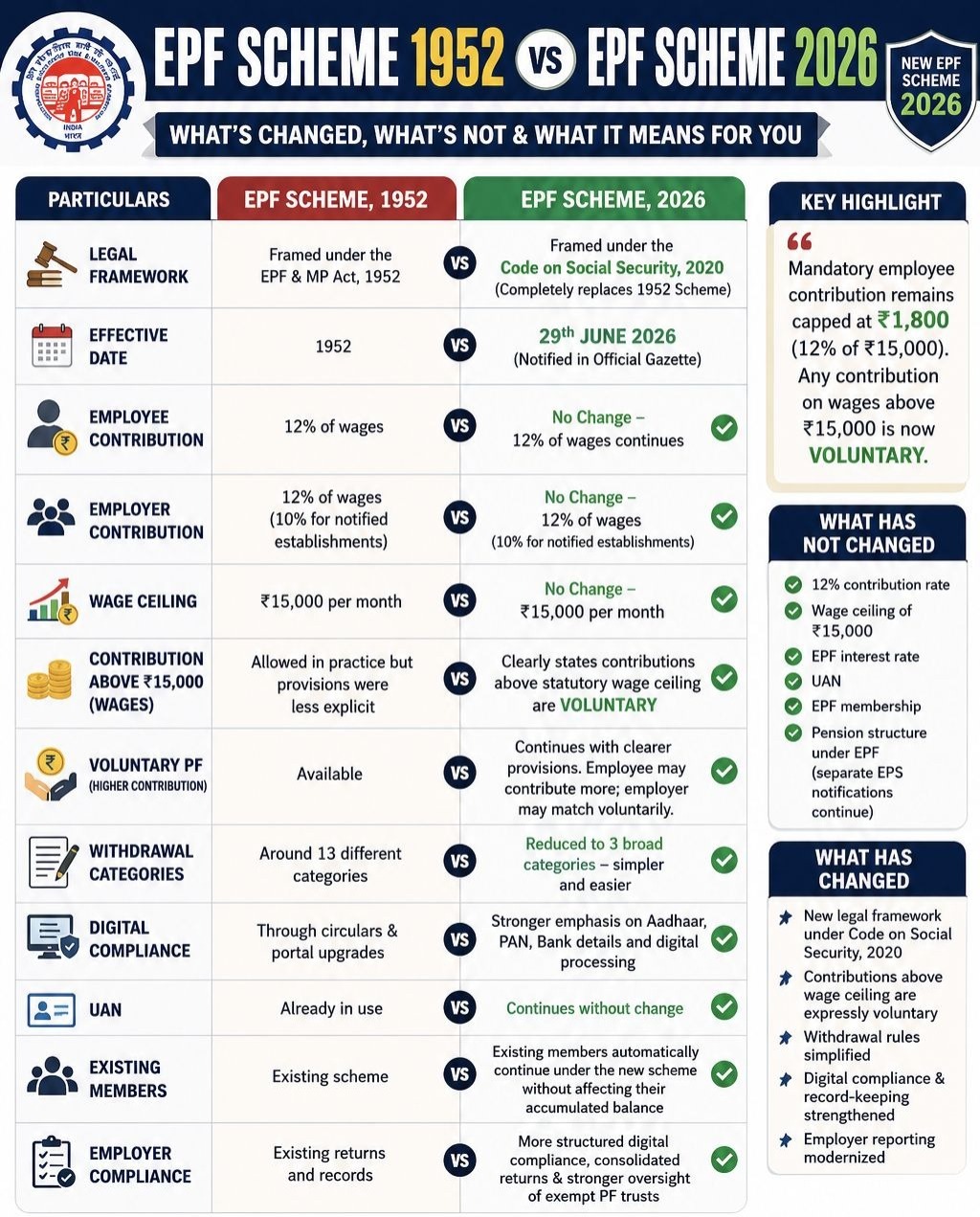


With the implementation of India’s new labour framework, payroll management has entered a new era. Salary structuring is no longer just an administrative task; it is now a critical compliance-driven function that directly impacts taxation, statutory benefits, and employee satisfaction.
Key Change: The 50% Wage Rule
The most significant shift under the new code is the redefined 'Wage' calculation. Basic Salary + Dearness Allowance (DA) must now constitute at least 50% of the total Cost to Company .
- Compliance Threshold: If allowances exceed 50% of the total remuneration, the excess amount is automatically treated as "wages" for statutory calculations.
- Statutory Impact: This rule directly increases the base used for calculating Provident Fund (PF) and Gratuity contributions.
Impact on Payroll and Employees
The restructuring has far-reaching consequences for both the employer's budget and the employee's wallet. Key impacts include:
- Increased Statutory Costs: Employers will see a rise in their mandatory contributions toward PF and Gratuity.
- Reduced Take-Home Salary: Higher statutory deductions often result in a lower net monthly take-home pay for employees.
- Tax Planning Shifts: Changes in salary components necessitate a complete overhaul of traditional tax-saving structures.
Strategic Approach for Employers
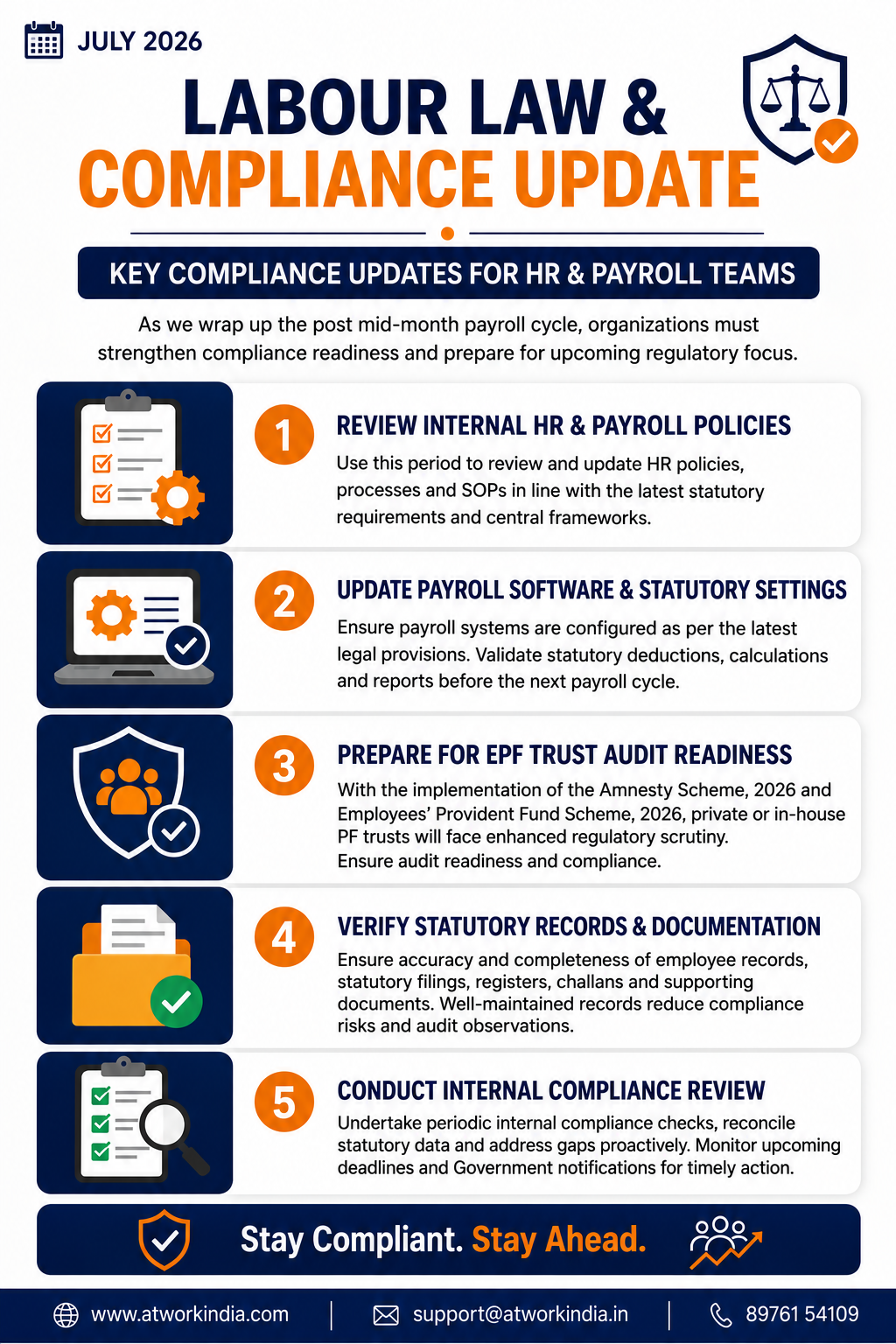
To navigate these changes, businesses must adopt a proactive compliance strategy. We recommend the following steps:
1. Redesign Salary Structures
Evaluate existing CTC models to ensure they align with the 50% wage rule while attempting to balance company costs with employee take-home expectations.
2. Upgrade Payroll Systems
Ensure your payroll software is updated to handle the new calculation logic and reporting requirements of the 2026 framework.
3. Conduct Compliance Audits
Regularly review your payroll data to prevent penalties, incorrect filings, and potential employee disputes arising from miscalculated wages.
Why It Matters
Non-compliance is no longer an option. Failure to adhere to the new wage code can lead to significant legal penalties and financial liabilities for the organization[cite: 3]. Payroll has officially evolved into a strategic compliance function that requires expert oversight.
Conclusion
Proactive CTC engineering is essential for business continuity in 2026. By understanding and implementing these structural changes now, businesses can ensure long-term stability and compliance in a shifting regulatory landscape.