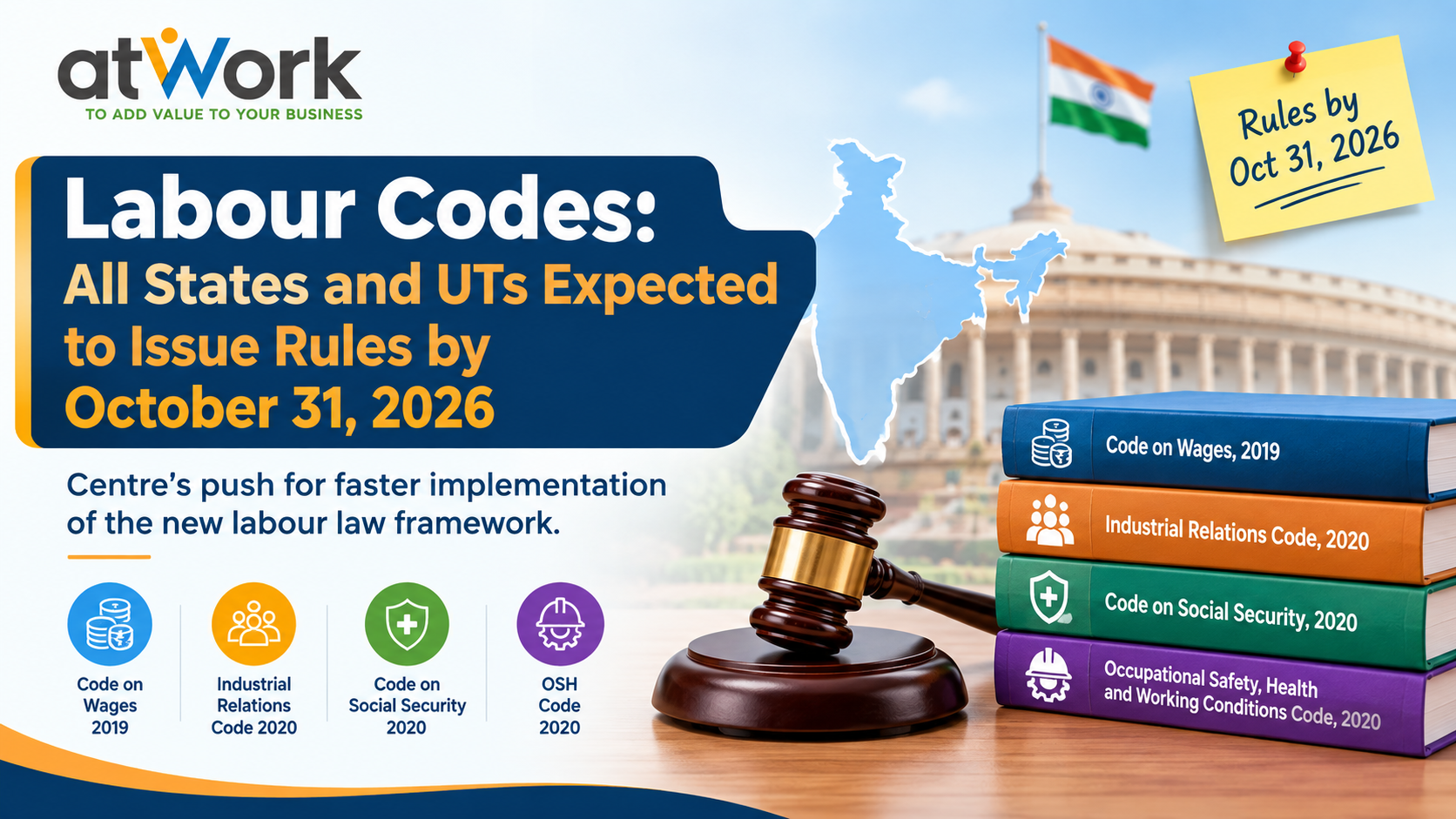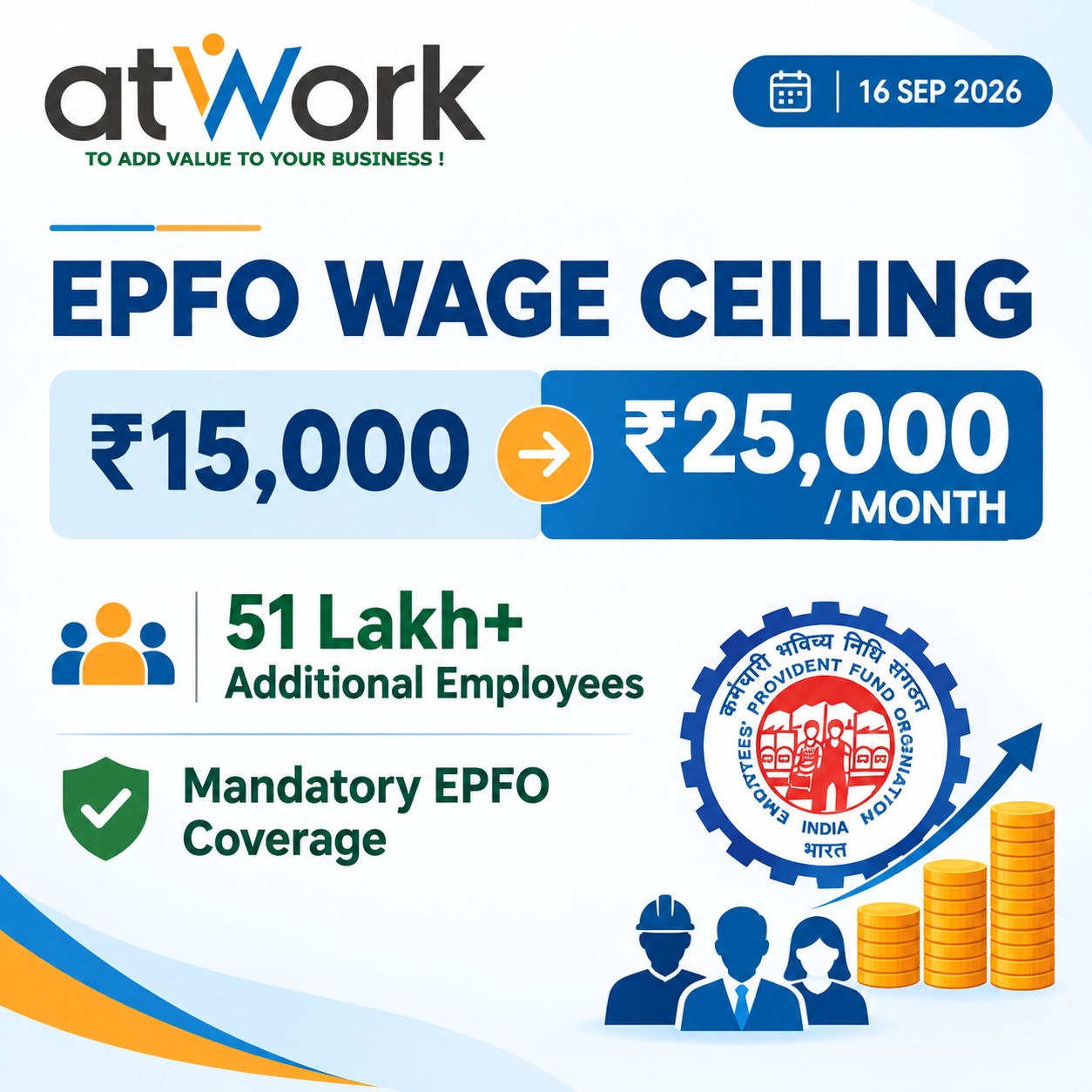


On May 29, 2026, the Ministry of Labour & Employment issued Gazette Notification S.O. 2702(E), formally setting the wage ceiling at ₹15,000 per month under Section 2(89) of the Code on Social Security, 2020 — for Chapter III (Provident Fund) purposes.
So what actually changed?
The ₹15,000 ceiling is not new. What's significant is that it is now formally notified under the Code on Social Security, 2020, replacing the older EPF & Miscellaneous Provisions Act, 1952 framework. This is a structural shift in how social security compliance is governed in India.
For most employers, day-to-day PF contributions won't change immediately. But this notification is a strong signal to audit your salary structures — because the definition of "wages" under the new Code is broader and more tightly regulated than before.
Three things employers should do now
- Ensure Basic + DA is at least 50% of Gross Salary. The Code on Wages restricts the use of allowances to artificially suppress PF contributions. If your current CTC structure has Basic below 50% of Gross, this must be corrected immediately.
- PF contribution floor is ₹1,800/month — no exceptions. This is 12% of the ₹15,000 ceiling. All covered employees must receive at minimum this contribution. Contributions on wages above ₹15,000 remain at the employer's discretion.
- Review and update salary structures across all employee categories. Verify that your payroll software, offer letters, and HR policy documents all reflect compliant wage definitions as required under the new Code.
A note on employer discretion above the ceiling
Employers are free to contribute PF on actual wages above ₹15,000 — many do, as a retention and benefits strategy. This notification does not restrict that. It simply anchors the minimum compliance baseline under the new Code.
For employees earning above the ceiling, any PF contribution above ₹1,800/month is voluntary on the employer's part. This is worth reviewing in your HR policy if it isn't clearly documented.
Why does the legal framework change matter?
The shift from the old EPF Act to the Code on Social Security, 2020 has implications beyond just PF. The Code consolidates nine central labour laws, redefines key terms like "wages," and gives the Central Government broader notification powers. As more provisions of the Code are operationalised, employers who haven't reviewed their structures will face increasing compliance exposure. Now is the right time to get ahead of it.
Source: Gazette of India, Extraordinary, Part II — Section 3(ii), Notification S.O. 2702(E), dated May 29, 2026. File No. R-12025/01/2026-SS-II, Ministry of Labour and Employment.